
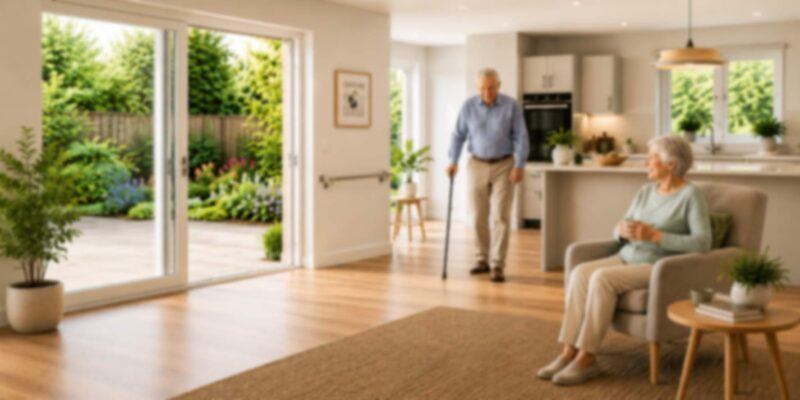
Ageing in place homes are becoming more important across Kent, Sussex and Surrey, as well as across the UK as a whole. More people want to stay in their own homes as they age. Doing so supports their independence and daily routines. However, most homes were not designed for long-term accessibility needs. This creates a clear need for thoughtful home adaptations in Kent, Sussex and Surrey.
Designing Accessible Homes for Long-Term Independence
Why People Choose to Age in Place
Our homes hold long-term personal and practical value. As we age, the overwhelming majority of people want to remain where they have built their lives rather than start again somewhere unfamiliar. From raising families to welcoming grandchildren, these spaces become part of our identity.
This desire is not just emotional; it is reflected clearly in national data. Research from Habinteg Housing Association highlights that only around 7% of homes in England meet even the most basic accessibility standards.
At the same time, Age UK reports that over 2 million people aged 65 and over have unmet housing needs linked to mobility, safety or accessibility. These figures underline a growing challenge and an opportunity to rethink how we adapt existing homes rather than replace them.
Key reasons include:
- Familiar surroundings and routines
- Access to local support networks and services
- Reduced disruption and stress
- Greater independence at home
For many families, staying in place feels more stable and practical.
Why People in Kent, Sussex and Surrey are Choosing to Age in Place
Across Kent, Sussex and Surrey, this trend is particularly visible. These regions are home to a large and growing ageing population; many of whom live in properties they have owned for decades.
According to Care for the Ageing Population insights, the demand for accessible home adaptations is rising steadily, driven by a preference for independence, familiarity and community connection.
Why Design for Independence Matters
Remaining at home is about far more than comfort. It supports mental wellbeing, preserves independence and allows people to stay connected to their local communities.
Moving into alternative accommodation, especially later in life, can be disruptive and emotionally challenging. For many, it is seen as a last resort rather than a preferred choice.
Multigenerational Living Across the South East
Multigenerational living is increasing in the South East. Families are choosing shared living for practical reasons. These include:
- Providing care within the family
- Managing rising housing costs
- Offering daily support between generations
This shift brings new opportunities, but also new challenges in how homes are designed and used, as the majority of current housing stock was not designed for multigenerational living.
Many existing properties were never intended to accommodate multiple generations under one roof. Privacy, accessibility and functionality can quickly become concerns without the right adaptations in place.
Most existing homes were built without future accessibility in mind. Common issues include:
- Stairs as the only route between floors
- Narrow internal layouts
- Bathrooms that are difficult to access
- Limited ground floor living space
These features can become barriers over time. They often require structural changes rather than simple refurbishment.
Thoughtful design can bridge that gap, creating spaces that support independence while still bringing families together.
Designing Accessible Homes for Long-Term Living Without Losing the Past
At Freedom Living Solutions, we understand that home adaptations are not about compromise. It’s about unlocking the full potential of your home.
Our approach is centred on preserving what makes a home special, while carefully integrating practical, future-proof solutions.
Every project begins with understanding how the space is used today and how needs may evolve over time. This allows us to develop tailored concepts that balance accessibility with aesthetics.
Typical solutions might include:
- Level access bathrooms and wet rooms (see our accessible bathrooms / wet rooms article.)
- Ground floor living and sleeping areas
- Reconfigured layouts for better movement and circulation
- Self-contained spaces for multigenerational living
- Wheelchair accessible home adaptations (learn more about wheelchair accessible homes.)
Our focus is always on making the home work better for the people who live in it.
Importantly, these changes are not just reactive. Forward-thinking design means planning for future mobility and care needs. This helps ensure that homeowners in Kent, Sussex and Surrey can remain confident in their space for years to come.
A Smarter, More Personal Alternative to Moving
The financial and emotional cost of moving later in life can be significant. By contrast, adapting an existing home often proves to be a more practical and fulfilling solution. It allows homeowners to retain their independence, stay close to family and neighbours, and continue enjoying the environment they know and love.
For families considering multigenerational living, adapting an existing home can also remove the need for separate properties. This makes it easier to provide support while maintaining appropriate levels of privacy and comfort.
Data from Age UK consistently shows that most older adults would prefer to remain in their own homes with the right support in place. The challenge has never been willingness; it has been getting access to the right design and build expertise to make it possible.
That is exactly where our process makes a difference.
Our Approach: From Concept to Completion
What sets Freedom Living Solutions apart is our integrated design and build process. We do not just deliver adaptations; we guide homeowners through a structured journey that starts with ideas and ends with a fully realised, practical solution. This includes:
- Exploring what is possible within the existing home
- Assessing suitability based on current and future needs
- Developing clear, thoughtful design concepts
- Managing the building work with precision and care
You can explore more about our wider approach to delivering accessible home conversions in Kent, Sussex and Surrey on our How We Work page.
This ensures that every project is not only functional, but also cohesive and respectful of the home’s character.
Looking to the Future of Ageing in Place
As the population continues to age, the conversation around housing must evolve. The focus is shifting from relocation to adaptation, from compromise to possibility. In regions like Kent, Sussex and Surrey, where homes are rich with history and personal significance, this shift is particularly important.
Ageing in place is not just a preference; it is a movement towards living better, for longer, in the spaces that matter most. It also reflects a broader shift towards homes that can support multiple generations, adapting as family needs change over time.
With the right approach, the homes that have supported generations can continue to do so, safely and beautifully, well into the future.
If you, or someone you know, is considering a home adaptation or multi-generation property conversion, please get in touch. A member of the Freedom team would be happy to discuss your needs and give you an idea of the costs involved.
_____________________________
FAQs: Ageing in Place in Kent, Sussex and Surrey
What does ageing in place mean?
Ageing in place means continuing to live in your own home as you grow older, rather than moving into alternative accommodation. It often involves adapting the home to support changing mobility, safety and accessibility needs over time.
What are the benefits of ageing in place?
Ageing in place allows people to remain in familiar surroundings, maintain independence and stay connected to their local community. It can also reduce the emotional and financial impact of moving later in life.
What home adaptations support ageing in place?
Common adaptations include level access bathrooms, wet rooms, widened doorways, improved layouts and ground floor living spaces. More advanced solutions may include wheelchair accessible features and self-contained areas for multigenerational living.
Can an existing home be adapted for long-term accessibility?
Yes. Most homes can be adapted to improve accessibility, although the level of work required will vary. Some properties may need structural changes to create safe, practical and future-proof living spaces.
What is a wheelchair accessible home?
A wheelchair accessible home is designed or adapted to allow easy movement throughout the property. This includes step-free access, wider doorways, accessible bathrooms and layouts that support turning space and circulation.
Is it better to adapt a home or move?
For many people, adapting an existing home is a more practical and personal solution than moving. It allows them to remain in a familiar environment while improving safety, comfort and long-term usability.
What is multigenerational living and how does it affect home design?
Multigenerational living is when multiple generations of a family live in one home. It often requires careful design to balance privacy, accessibility and shared spaces, particularly in homes not originally built for this purpose.
Are there grants available for home adaptations in the UK?
In some cases, funding may be available through schemes such as the Disabled Facilities Grant (DFG). Eligibility depends on individual circumstances, property suitability and local authority criteria.
How do I start planning home adaptations for ageing in place?
The first step is to assess how the home is currently used and how needs may change over time. Working with a specialist in accessible design and build can help identify practical solutions and guide the process from concept to completion.