
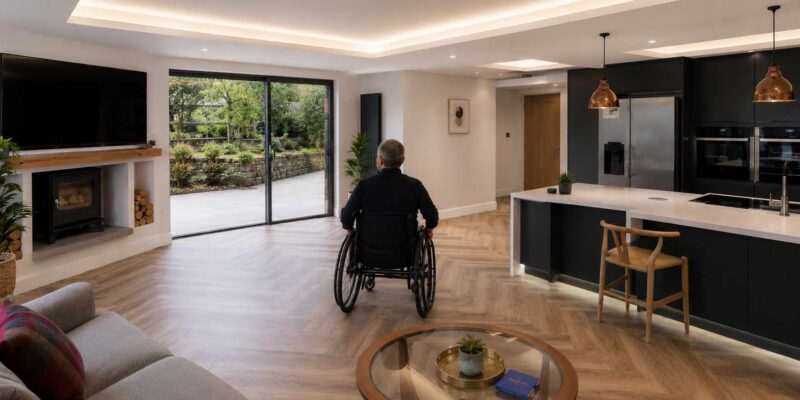
Design for Independence is a specialised architectural and clinical discipline that combines accessible home design, occupational therapy (OT), and smart assistive technology.Its primary goal is to create tailored living environments that allow individuals with life-changing injuries, neurological conditions, or complex disabilities to live safely, autonomously, and with dignity.
Reimagining Accessible Home Design for Independent Living
When a person experiences a life-changing injury, progressive neurological condition, or severe brain trauma, the concept of ‘home’ changes instantly. It stops being just a place of comfort and becomes a critical factor in physical ability, safety, and wellbeing.
In specialist accessible architecture, we frequently encounter the term Design for Independence. But what does it actually mean? It is not simply about adding ramps or installing grab rails.
True independence looks different for everyone. For one person, it means preparing a meal unaided in an accessible kitchen. For another, it means independently controlling lighting, blinds, or communication systems through smart assistive technology.
This article explores how specialist design teams translate complex medical, physical, and psychological needs into practical living environments that support independent living.
How Do Architects and Occupational Therapists Collaborate?
An accessible home cannot be designed in a vacuum. Every individual experiences disability differently. A successful design must support not only physical function, but also personal routines, emotional wellbeing, and long-term aspirations. To create spaces that genuinely foster autonomy, architectural expertise must be paired with clinical insight from the earliest possible stage.
When commissioned to design a disability-adapted property, our design team engages with the client’s Occupational Therapist (OT) from day one. This collaboration is vital. While architects understand spatial planning, structural integrity, and building regulations, Occupational Therapists understand human function and the physical and psychological impact of space.
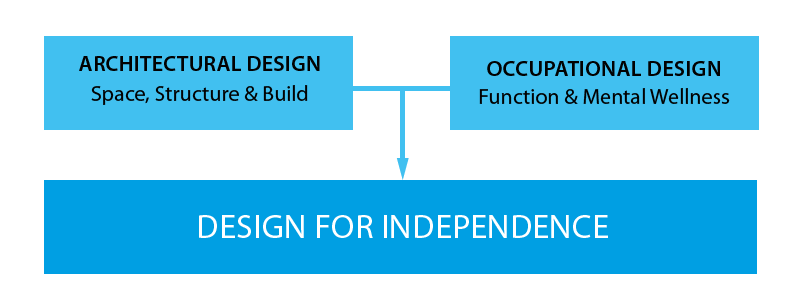
An OT’s professional assessment considers both practical daily functions and long-term wellbeing. By working closely alongside OTs, family members, healthcare professionals, and Court Deputies, we develop a holistic understanding of the client’s lifestyle, routines, and future requirements.
This collaborative approach allows us to create accessible home designs that adapt alongside evolving needs, ensuring the property remains functional, safe, and future-ready for years to come.
What Key Elements Support Greater Independence at Home?
At its heart, Design for Independence aims to help individuals live more safely and independently within their own homes.
Whether building a brand-new property to M4(3) Wheelchair Accessible Home standards, supporting Ageing in Place, or creating a self-contained accessible annexe, the architectural details directly influence the level of autonomy a person can achieve.
Key elements of an adaptive living environment include:
- Spatial Flow Widening: Expanding doorways and removing internal thresholds allows smooth wheelchair movement and safer circulation throughout the property.
- Level-Access Bathrooms: Creating wet rooms with flush thresholds helps eliminate trip hazards and supports safer transfers. Learn more in our Accessible and Adapted Bathrooms Guide.
- Accessible Kitchens: Drop-down cupboards, motorised height-adjustable worktops, and shallow-depth sinks allow wheelchair users to cook safely. Explore our Accessible Kitchens Guide.
- Intelligent Lighting: High-contrast finishes, glare reduction, and automated lighting systems assist individuals living with sensory or cognitive visual impairments.
- Environmental Controls: Smart-home systems support independent living by allowing individuals with limited mobility to control doors, blinds, lighting, and heating through voice activation or switch controls. Explore our Smart Home Assistive Technology article.
By carefully planning these home adaptations, the property shifts from an obstacle course into an empowering environment.
Good accessible home design should remove barriers quietly and seamlessly, allowing adapted living spaces to feel comfortable, functional, and personal. When an individual can move confidently through their home without constantly relying on assistance, independence and dignity are naturally restored.
How Do You Balance Safety, Independence, and Personal Choice?
An important discussion within modern healthcare and accessible design centres around balancing safety with autonomy. How do we create environments that support independent living while also protecting the individual from unnecessary risk?
Frameworks such as the UK Care Act 2014 emphasise wellbeing, personal choice, and the right to self-determination. In practice, this means individuals should be supported to take positive and manageable risks, rather than being restricted by overly clinical environments.
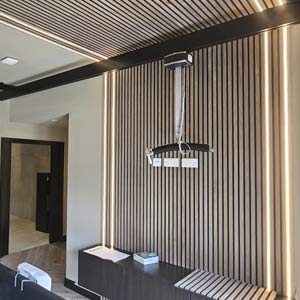
Our role as specialist designers and builders is to resolve this tension through thoughtful, discreet design solutions. For example, instead of installing visible institutional hoist systems that make a bedroom feel clinical, we can recess ceiling hoists into the structure itself.
Case Study: Bespoke Independence
We recently worked with a young man who had suffered life-changing injuries. He had a strong passion for interior design and completely rejected the idea of a clinical-looking home.
By listening carefully to his goals, our team collaborated with an interior designer and specialist suppliers to commission bespoke matte black ceiling hoists and matching contemporary bathroom fittings. The result was a striking, high-end interior that delivered full functional independence without compromising personal style.
Through thoughtful planning, we can also support carer-inclusive accessible home design. This allows properties to accommodate care teams without compromising privacy, dignity, or the feeling of a welcoming family home.
Does Design for Independence Extend Beyond the Home?
True Design for Independence should not stop at the front door. Gardens, patios, balconies, and external spaces should be accessible and inclusive wherever possible. Inclusive design should encourage individuals to remain socially connected and actively engaged with the world beyond the home.
When designing outdoor environments, we focus on creating safe, step-free transitions that allow individuals to enjoy outdoor living alongside family and friends.
Key considerations include:
- Slip-Resistant, Flush Thresholds: Carefully selected paving materials improve grip in wet weather while maintaining flush transitions between internal and external spaces.
- Inclusive Outdoor Activities: Raised planting beds positioned at wheelchair height allow the whole family to participate in gardening together.
- Sensory and Biodiverse Landscaping: Soft landscaping and strategic planting help create calming, therapeutic outdoor environments while encouraging biodiversity.
To explore our structural approaches to outdoor accessibility, view our Guide to External Spaces and Accessible Outbuildings.
Designing for Complex Needs With Dignity
Design for Independence combines empathy, clinical understanding, and specialist accessible design to create environments that genuinely support independent living. Whether modifying a property following brain trauma or delivering a bespoke wheelchair-accessible new build, success lies in hidden details that empower the individual while preserving the warmth, style, and soul of a true home.
If you require specialist design and construction input on an accessible home project, please get in touch. A member of our team will be happy to discuss your proposed project and the ways in which we can help.